94 Quotes by Theodore Roosevelt and The History Behind Them
Theodore Roosevelt's most memorable quotes and the history and meaning in which it was said.
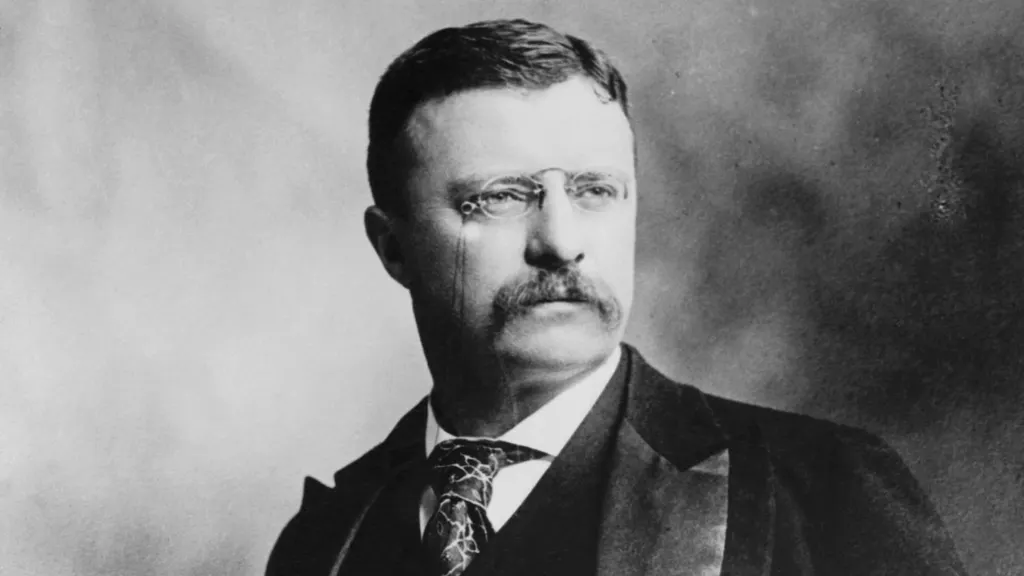
Theodore Roosevelt was one of America's most energetic and influential presidents. Known for his fearless leadership, adventurous spirit, and unwavering belief in hard work, his words continue to inspire leaders, entrepreneurs, students, and everyday people more than a century later.
His quotes cover everything from courage and perseverance to leadership, character, conservation, and public service. Many came from his speeches, books, letters, and presidential addresses, while others have become timeless expressions of his philosophy of living "the strenuous life."
Below, you'll find Theodore Roosevelt's most memorable quotes and the history and meaning in which it was said, giving you a deeper appreciation for the man behind the words.
"Believe you can and you're halfway there."
This is Theodore Roosevelt's most quoted line. Although widely attributed to him, researchers note that the exact wording appears in later publications rather than his known writings, making it one of his most debated quotations.
"Do what you can, with what you have, where you are."
Roosevelt popularized this advice in An Autobiography while recalling the practical philosophy of his friend "Squire Bill" Widener. It reflects Roosevelt's belief in taking action instead of waiting for perfect conditions.
"It is hard to fail, but it is worse never to have tried to succeed."
Roosevelt said these words in his famous 1910 speech "Citizenship in a Republic" at the Sorbonne in Paris, encouraging people to embrace risk rather than avoid failure.
"The only man who never makes a mistake is the man who never does anything."
Roosevelt often emphasized that mistakes are the natural cost of taking meaningful action, an idea that appears repeatedly throughout his writings and speeches.
"Nothing in the world is worth having or worth doing unless it means effort, pain, difficulty."
Roosevelt believed comfortable living rarely produced greatness. He often used this idea to encourage perseverance through hardship.
"Knowing what's right doesn't mean much unless you do what's right."
Roosevelt believed character was defined by action, not merely by good intentions or moral knowledge.
"Bodily vigor is good, and vigor of intellect is even better, but far above both is character."
Roosevelt overcame severe childhood asthma through rigorous physical training, making his emphasis on character especially personal.
"The chief factor in any man's success or failure must be his own character."
Roosevelt consistently argued that integrity mattered more than talent, wealth, or opportunity.
"Comparison is the thief of joy."
Although this quote is frequently attributed to Roosevelt today, historians have not found a verified source in his writings, making its authorship uncertain.
"People don't care how much you know until they know how much you care."
This famous saying is commonly credited to Roosevelt, but no reliable historical evidence has confirmed that he actually said or wrote it.
"The most important single ingredient in the formula of success is knowing how to get along with people."
Roosevelt's energetic leadership style relied heavily on building relationships across politics, journalism, and business.
"With self-discipline almost anything is possible."
Roosevelt developed remarkable self-discipline from an early age, transforming himself from a sickly child into a soldier, rancher, explorer, and president.
"Big jobs usually go to the men who prove their ability to outgrow small ones."
Roosevelt believed leadership was earned gradually by consistently exceeding expectations in smaller responsibilities.
"Nine-tenths of wisdom is being wise in time."
Roosevelt often stressed that good judgment includes knowing when to act, not simply knowing what to do.
"Old age is like everything else. To make a success of it, you've got to start young."
Roosevelt encouraged developing healthy habits and strong character early in life rather than trying to build them later.
"The boy who is going to make a great man must not make up his mind merely to overcome a thousand obstacles, but to win in spite of a thousand repulses and defeats."
Roosevelt often used this message to encourage persistence, believing repeated setbacks were part of every worthwhile achievement.
"Unless a man is master of his soul, all other kinds of mastery amount to little."
Roosevelt believed self-control was the foundation of every other form of leadership, whether in politics, business, or personal life.
"The things that will destroy America are prosperity-at-any-price, peace-at-any-price, safety-first instead of duty-first, the love of soft living, and the get-rich-quick theory of life."
Roosevelt warned against complacency in a speech during the early 1900s. He believed a nation's strength depended on character and responsibility, not comfort or wealth.
"Freedom from effort in the present merely means that there has been effort stored up in the past."
Roosevelt used this idea to remind people that every lasting success is built on previous hard work, whether in personal life or national progress.
"No man is above the law and no man is below it."
Roosevelt frequently emphasized equal justice while serving as president, arguing that the law should apply fairly to both powerful corporations and ordinary citizens.
"A thorough knowledge of the Bible is worth more than a college education."
Roosevelt was an avid reader with a deep appreciation for history, literature, and Scripture. He viewed the Bible as one of the greatest influences on Western civilization.
"To educate a person in the mind but not in morals is to educate a menace to society."
This remains one of Roosevelt's best-known statements on education, highlighting his belief that character mattered as much as academic achievement.
"Courtesy is as much a mark of a gentleman as courage."
Roosevelt admired bravery but believed genuine strength also required kindness, respect, and good manners.
"The best executive is the one who has sense enough to pick good men to do what he wants done, and self-restraint enough to keep from meddling while they do it."
Roosevelt credited successful leadership to surrounding yourself with capable people and trusting them to do their jobs well.
"Aggressive fighting for the right is the noblest sport the world affords."
Roosevelt often described life's greatest challenge as standing up for what is right, even when doing so was difficult or unpopular.
"The first requisite of a good citizen in this republic is that he shall be able and willing to pull his own weight."
Roosevelt strongly believed that citizenship came with responsibilities, not just rights. He frequently encouraged Americans to contribute to the common good.
"Order without liberty and liberty without order are equally destructive."
Roosevelt believed a healthy democracy required balancing individual freedom with respect for laws and institutions.
"The one thing I want to leave my children is an honorable name."
Roosevelt often said that reputation and integrity were worth far more than wealth or inheritance.
"Character, in the long run, is the decisive factor in the life of an individual and of nations alike."
Roosevelt applied this principle to both personal development and national leadership, believing strong character ultimately determined success.
"The most practical kind of politics is the politics of decency."
Roosevelt argued that honesty and fairness were not only moral ideals but also practical foundations for effective government.
"There can be no life without change, and to be afraid of what is different or unfamiliar is to be afraid of life."
Roosevelt embraced exploration throughout his life, from ranching in the American West to leading scientific expeditions in South America.
"Rhetoric is a poor substitute for action."
Known for his energetic leadership style, Roosevelt believed speeches meant little unless followed by decisive action.
"In any moment of decision, the best thing you can do is the right thing. The next best thing is the wrong thing. The worst thing you can do is nothing."
This quote reflects Roosevelt's lifelong bias toward action. He believed indecision often caused more harm than honest mistakes.
"No man needs sympathy because he has to work, because he has a burden to carry."
Roosevelt saw meaningful work as a privilege that built resilience, purpose, and self-respect.
"Great thoughts speak only to the thoughtful mind, but great actions speak to all mankind."
Roosevelt admired thinkers, but he believed actions created the greatest and most lasting impact on society.
"I have never in my life envied a human being who led an easy life. I have envied a great many people who led difficult lives and led them well."
Roosevelt admired resilience over comfort. This quote reflects his lifelong belief that character is forged through hardship rather than ease.
"People ask the difference between a leader and a boss. The leader leads, and the boss drives."
This remains one of Roosevelt's most popular leadership quotes and is still widely used in management and business training today.
"I am only an average man, but by George, I work harder at it than the average man."
Roosevelt often downplayed his natural abilities, instead crediting relentless effort for his accomplishments as a soldier, author, explorer, and president.
"The unforgivable crime is soft hitting. Do not hit at all if it can be avoided; but never hit softly."
Roosevelt believed that once you commit to a cause, you should pursue it with conviction rather than half-hearted effort.
"I care not what others think of what I do, but I care very much about what I think of what I do. That is character!"
This quote captures Roosevelt's emphasis on integrity and personal accountability over public approval.
"Patriotism means to stand by the country. It does not mean to stand by the President."
Roosevelt continued by saying leaders deserve support only when they serve the nation's interests, making this one of his most frequently cited statements on civic duty.
"It is not often that a man can make opportunities for himself. But he can put himself in such shape that when or if the opportunities come he is ready."
Roosevelt believed preparation creates luck. His own life—from ranching in the Dakotas to leading the Rough Riders—illustrated this principle.
"I am an American; free born and free bred, where I acknowledge no man as my superior, except for his own worth, or as my inferior, except for his own demerit."
Roosevelt used this statement to express his belief that people should be judged by character and ability rather than social status.
"The most successful politician is he who says what the people are thinking most often in the loudest voice."
Roosevelt understood the power of communication and public sentiment long before the age of mass media.
"The things worth having in life are won only after hard work and sacrifice."
Although expressed in different forms throughout his speeches, this idea became a cornerstone of Roosevelt's philosophy known as "the strenuous life."
"There is a delight in the hardy life of the open."
Roosevelt's years as a rancher in the Dakota Badlands shaped his lifelong love of nature and conservation.
"The farther one gets into the wilderness, the greater is the attraction of its lonely freedom."
Roosevelt wrote these words after spending time in the American West. His passion for wild places helped inspire the modern conservation movement.
"While my interest in natural history has added very little to my sum of achievement, it has added immeasurably to my sum of enjoyment in life."
Roosevelt was an enthusiastic naturalist who collected specimens and helped protect millions of acres of public land.
"It is an incalculable added pleasure to anyone's sum of happiness if he or she grows to know... the wonder-book of nature."
Roosevelt believed that spending time outdoors enriched life and strengthened appreciation for the natural world.
"The joy of living is his who has the heart to demand it."
Roosevelt saw happiness as an active pursuit rather than something that simply happened by chance.
"I have a perfect horror of words that are not backed up by deeds."
This quote perfectly summarizes Roosevelt's action-oriented leadership style. He believed promises meant little without results.
"The man who really counts in the world is the doer, not the mere critic."
This shorter statement echoes the same philosophy behind Roosevelt's famous "Man in the Arena" speech: action matters more than criticism.
"Wide differences of opinion in matters of religious, political and social belief must exist if conscience and intellect alike are not to be stunted."
Roosevelt defended open debate and believed a healthy democracy required diverse viewpoints.
"Complaining about a problem without proposing a solution is called whining."
This quote is widely attributed to Roosevelt, but historians have not found a verified source in his writings, so its authenticity remains uncertain.
"I can do one of two things. I can be President of the United States, or I can control Alice. I cannot possibly do both."
Roosevelt joked about his spirited daughter, Alice Roosevelt Longworth, whose outspoken personality often made newspaper headlines during his presidency.
"Speak softly and carry a big stick; you will go far."
This is Roosevelt's signature foreign policy motto. He first used the phrase publicly in 1901, and it became known as the "Big Stick" approach to diplomacy. Big Stick diplomacy
"A vote is like a rifle: its usefulness depends upon the character of the user."
Roosevelt believed democracy could only succeed when citizens voted responsibly and thoughtfully, making this one of his most enduring political observations.
"No people are wholly civilized where a distinction is drawn between stealing an office and stealing a purse."
Roosevelt was a strong advocate for government reform and believed political corruption was just as harmful as ordinary theft.
"Every immigrant who comes here should be required within five years to learn English or leave the country."
Roosevelt strongly supported assimilation into American civic life. While this quote reflects his views in the early 1900s, it remains a topic of historical and political debate today.
"The stream cannot rise higher than its source."
Roosevelt often used this metaphor to explain that institutions and governments ultimately reflect the character of the people who lead them.
"Every reform movement has a lunatic fringe."
Roosevelt coined the now-famous expression "lunatic fringe" in a 1913 letter. The phrase has since become a common part of the English language.
"A man who has never gone to school may steal from a freight car; but if he has a university education, he may steal the whole railroad."
Roosevelt used this witty remark to argue that education without ethics could make wrongdoing even more dangerous.
"There were all kinds of things I was afraid of at first, ranging from grizzly bears to 'mean' horses and gunfighters; but by acting as if I was not afraid I gradually ceased to be afraid."
Roosevelt admitted he wasn't naturally fearless. Instead, he believed courage was something that could be developed through repeated action.
"I wish to preach, not the doctrine of ignoble ease, but the doctrine of the strenuous life."
Roosevelt delivered these famous words in his influential 1899 speech "The Strenuous Life," urging Americans to embrace hard work, service, and challenge.
"The cornerstones of national happiness are honesty, truthfulness, sympathy, and courage."
Roosevelt believed a nation's prosperity depended more on the character of its people than on its wealth or military strength.
"Every thinking man, when he thinks, realizes that the teachings of the Bible are so interwoven with our whole civic and social life that it would be literally impossible for us to figure to ourselves what that life would be if these teachings were removed."
Roosevelt frequently spoke about the Bible's influence on American culture, history, and public morality.
"When you're at the end of your rope, tie a knot and hold on."
This quote is often credited to Roosevelt, but historians have found no reliable evidence that he actually said or wrote it. It is considered a misattribution.
"The only limit to our realization of tomorrow is our doubts of today."
Despite its frequent appearance on quote websites under Roosevelt's name, this quote was actually spoken by Franklin D. Roosevelt in 1945.
"Leave it as it is. The ages have been at work on it and man can only mar it."
Roosevelt reportedly said this while visiting the Grand Canyon National Park in 1903, urging Americans to preserve one of the country's greatest natural wonders.
"There is nothing more practical than a good theory."
Roosevelt often argued that sound principles should guide practical decision-making, especially in public service and leadership.
"The welfare of each of us is dependent fundamentally upon the welfare of all of us."
Roosevelt emphasized that individual success and national prosperity were closely connected, reflecting his belief in civic responsibility.
"We stand at Armageddon, and we battle for the Lord."
Roosevelt used this dramatic line while accepting the nomination of the Progressive Party in 1912. It became one of the defining quotes of his "Bull Moose" campaign.
"No triumph of peace can equal the armed triumph of war."
Roosevelt admired military service and believed courage in battle represented one of humanity's highest tests, though he also worked successfully as a peacemaker in international diplomacy.
"The conservation of our natural resources and their proper use constitute the fundamental problem which underlies almost every other problem of our national life."
Roosevelt helped establish over 230 million acres of protected public land, earning him recognition as one of America's greatest conservation presidents.
"The nation behaves well if it treats the natural resources as assets which it must turn over to the next generation increased, and not impaired, in value."
Roosevelt's conservation philosophy was decades ahead of its time and continues to influence environmental policy and national park management today.
"The one absolutely certain way of bringing this nation to ruin would be to permit it to become a nation of mere well-to-do people."
Roosevelt believed prosperity without purpose could weaken a nation's character. He urged Americans to value service and responsibility over comfort.
"The success of our institutions depends upon the ability of our people to govern themselves."
Roosevelt often reminded Americans that democracy requires active, informed, and responsible citizens—not just effective leaders.
"No great intellectual thing was ever done by great effort alone."
Roosevelt believed imagination and enthusiasm were just as important as hard work when pursuing meaningful achievements.
"There can be no greater issue than that of conservation in this country."
During his presidency, Roosevelt created five national parks, 18 national monuments, and expanded federal protection for forests and wildlife, leaving one of the greatest conservation legacies in U.S. history.
"When we call a man a successful politician, we generally mean that he has been successful in deceiving the public."
Roosevelt was known for criticizing dishonesty in politics, even within his own party, and consistently called for higher standards in public office.
"The credit belongs to the man who is actually in the arena."
This famous line comes from Roosevelt's 1910 "Citizenship in a Republic" speech. It has become one of the most quoted passages on courage, leadership, and perseverance.
"The highest form of success comes, not to the one who desires mere easy peace, but to the one who does not shrink from danger, hardship, or bitter toil."
Roosevelt's philosophy of "the strenuous life" encouraged people to pursue difficult goals rather than comfortable lives.
"No man should receive a dollar unless that dollar has been fairly earned."
Roosevelt advocated fair business practices and believed both employers and workers had ethical responsibilities.
"Americanism is a question of spirit, conviction, and purpose, not of creed or birthplace."
Roosevelt frequently argued that loyalty to American ideals mattered more than ancestry, though he also expected immigrants to fully embrace American civic life.
"The object of government is the welfare of the people."
Roosevelt believed government should protect both individual opportunity and the public interest, a philosophy that shaped many of his domestic reforms.
"No man can lead a public life if he is not willing to be misunderstood."
Roosevelt experienced criticism throughout his career, from trust-busting to conservation policies, yet remained committed to making unpopular decisions when he believed they were right.
"Greatness means striving toward a great ideal."
Roosevelt believed true greatness was measured by purpose and effort rather than wealth, fame, or status.
"The true test of civilization is not the census, nor the size of the cities, nor the crops—no, but the kind of man the country turns out."
Roosevelt judged a nation's success by the character of its citizens rather than by economic or population statistics.
"Much has been given us, and much will rightfully be expected from us."
Roosevelt often reminded Americans that privilege brings responsibility—a theme that appeared throughout his speeches on citizenship.
"It is better to be faithful than famous."
Although less well known than many of his sayings, this quote reflects Roosevelt's lifelong emphasis on integrity over popularity.
"The foundation stone of national life is, and ever must be, the high individual character of the average citizen."
Roosevelt believed a nation's future depended on the everyday character of ordinary people more than on its political leaders.
"No man is justified in doing evil on the ground of expediency."
Roosevelt argued that practical benefits should never outweigh moral principles, a view he carried into public service.
"The greatest gift life has to offer is the opportunity to work hard at work worth doing."
This is a variation of one of Roosevelt's most famous quotations and captures his enduring belief that meaningful work is life's greatest reward.
"Keep your eyes on the stars, but remember to keep your feet on the ground."
This expanded version of Roosevelt's famous quote is widely used in commencement speeches and leadership books because it balances ambition with humility.

