97 Quotes by George Washington and Their Historical Context
George Washington's most memorable quotes with their historical context and why his words continue to resonate today.
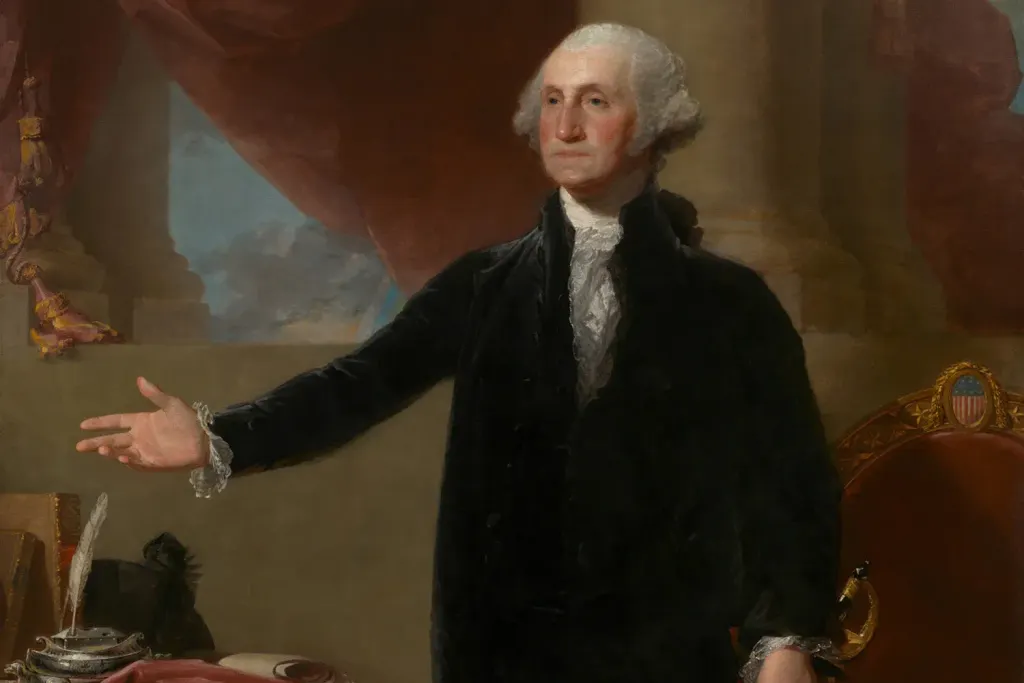
George Washington was more than a military commander and the first President of the United States—he was one of the most influential voices of the founding era. His words helped shape a new nation, offering guidance on leadership, liberty, character, government, and public service.
Drawn from letters, speeches, military orders, presidential addresses, and personal writings, Washington's quotes continue to be studied more than two centuries later. Some became defining principles of American democracy, while others reveal the values and challenges of the man known as the "Father of His Country."
This collection brings together George Washington's most memorable quotes with their historical context and why his words continue to resonate today.
“It is better to offer no excuse than a bad one.”
This quote reflects Washington's strong belief in personal responsibility, a trait that helped build trust in his leadership during the American Revolution.
“Liberty, when it begins to take root, is a plant of rapid growth.”
Washington wrote these words in a 1788 letter while supporting the newly proposed U.S. Constitution and the future of the young nation.
“Associate with men of good quality if you esteem your own reputation; for it is better to be alone than in bad company.”
This advice comes from Washington's famous Rules of Civility, a collection of behavioral guidelines he copied by hand as a teenager.
“Perseverance and spirit have done wonders in all ages.”
Washington often emphasized persistence, especially after surviving numerous military setbacks before ultimately winning independence.
“Few men have virtue to withstand the highest bidder.”
This observation reflects Washington's concern about corruption and the influence of money in public affairs.
“Truth will ultimately prevail where there is pains to bring it to light.”
Washington frequently stressed honesty and integrity in both military and political leadership.
“Discipline is the soul of an army.”
During the Revolutionary War, Washington transformed a poorly trained collection of militias into a more professional fighting force.
“To be prepared for war is one of the most effective means of preserving peace.”
This idea later became a lasting principle in American defense policy and is often cited by military leaders.
“Observe good faith and justice toward all nations.”
Washington included this advice in his Farewell Address, urging the United States to maintain honorable foreign relations.
“Human happiness and moral duty are inseparably connected.”
Variations of this quote appeared in Washington's correspondence, highlighting his belief that ethics and happiness go hand in hand.
“The harder the conflict, the greater the triumph.”
Although often associated with the hardships of the Revolution, historians debate the exact wording and source of this quote.
“Guard against the impostures of pretended patriotism.”
Washington warned that some people might use patriotic language to advance personal ambitions rather than serve the public good.
“Real men despise battle, but will never run from it.”
This quote reflects Washington's view that courage is not a love of conflict but a willingness to face necessary challenges.
“Arbitrary power is most easily established on the ruins of liberty abused to licentiousness.”
Washington believed freedom required responsibility and that disorder could create opportunities for tyranny.
“A primary object should be the education of our youth in the science of government.”
Washington strongly supported education and believed informed citizens were essential for democracy to succeed.
“Labor to keep alive in your breast that little spark of celestial fire called conscience.”
This is one of Washington's most famous quotes about character and moral judgment.
“The Constitution is the guide which I never will abandon.”
As the first president, Washington helped establish the precedent that the Constitution, not individuals, would guide the government.
“Experience teaches us that it is much easier to prevent an enemy from posting themselves than it is to dislodge them after they have got possession.”
Washington learned this lesson through years of military campaigning against both British and French forces.
“The basis of our political systems is the right of the people to make and alter their constitutions of government.”
Washington viewed popular sovereignty—the people's right to govern themselves—as a cornerstone of the American experiment.
“Worry is the interest paid by those who borrow trouble.”
This quote is frequently attributed to Washington, though historians have not found a definitive primary source. It remains one of the sayings most commonly linked to him.
“My first wish is to see this plague of mankind, war, banished from the earth.”
Despite being a military leader, Washington often expressed hope for lasting peace and viewed war as a necessary evil rather than a glory.
“Let your discourse with men of business be short and comprehensive.”
This guidance comes from Washington's Rules of Civility, which he copied as a young student to improve his conduct.
“Be courteous to all, but intimate with few.”
Washington was known for maintaining a reserved personality, carefully choosing his closest confidants throughout his life.
“Friendship is a plant of slow growth.”
Washington wrote these words in a 1783 letter, emphasizing that genuine friendships develop through trust and shared experiences.
“There is nothing which can better deserve your patronage than the promotion of science and literature.”
Washington believed education, learning, and scientific advancement were essential to the future success of the United States.
“The consciousness of having discharged that duty which we owe to our country is superior to all other considerations.”
Washington frequently placed public service above personal gain, even stepping away from power when many expected him to remain.
“A good moral character is the first essential in a man.”
Character and reputation were recurring themes in Washington's letters and advice to younger generations.
“The path of true piety is so plain as to require but little political direction.”
Washington often spoke about religion's role in encouraging virtue while also supporting religious freedom.
“It is impossible to rightly govern a nation without God and the Bible.”
This quote is widely attributed to Washington, but historians debate its authenticity because no verified source has been found.
“Mankind, when left to themselves, are unfit for their own government.”
Washington believed liberty required laws, institutions, and civic virtue to prevent chaos and instability.
“No morn ever dawned more favorable than ours did.”
Washington wrote this optimistic assessment shortly after the Constitution was ratified and the new government was taking shape.
“The establishment of civil and religious liberty was the motive which induced me to the field.”
Washington often described the Revolutionary War as a fight to secure fundamental rights rather than personal power.
“There can be no greater error than to expect or calculate upon real favors from nation to nation.”
This warning appears in Washington's Farewell Address and reflects his belief that countries act primarily in their own interests.
“A free people ought not only to be armed but disciplined.”
Washington believed national security depended on both citizen participation and proper military organization.
“Nothing is a surer foundation for happiness than a moderate and cheerful temper.”
Washington valued self-control and emotional balance, qualities he worked to cultivate throughout his life.
“I walk on untrodden ground.”
Washington wrote these words during his presidency, recognizing that every action he took would set precedents for future presidents.
“No country upon earth had it more in its power to attain these blessings than the United States.”
Washington was optimistic about America's future but warned that success depended on unity and responsible government.
“The great rule of conduct for us, in regard to foreign nations, is to have with them as little political connection as possible.”
This famous principle from the Farewell Address influenced American foreign policy for generations.
“Citizens by birth or choice, of a common country, that country has a right to concentrate your affections.”
Washington emphasized national unity at a time when regional loyalties often outweighed loyalty to the United States.
“The preservation of the sacred fire of liberty, and the destiny of the republican model of government, are justly considered as deeply, perhaps finally, staked on the experiment entrusted to the hands of the American people.”
Washington delivered these words in his First Inaugural Address in 1789, emphasizing the world's attention on the new American republic.
“There is no truth more thoroughly established than that there exists in the economy and course of nature an indissoluble union between virtue and happiness.”
This idea appeared in Washington's First Inaugural Address and reflected his belief that moral conduct contributes to national success.
“The propitious smiles of Heaven can never be expected on a nation that disregards the eternal rules of order and right.”
Washington often linked public virtue with national prosperity, a common theme in his speeches and letters.
“Firearms stand next in importance to the Constitution itself.”
This quote is often attributed to Washington, but historians have found no reliable evidence that he actually said or wrote it.
“The time is near at hand which must determine whether Americans are to be free men or slaves.”
Washington wrote this during the Revolutionary War when the outcome of the struggle remained highly uncertain.
“It is substantially true that virtue or morality is a necessary spring of popular government.”
This statement comes from Washington's Farewell Address, where he argued that democracy depends on ethical citizens.
“Reason and experience both forbid us to expect that national morality can prevail in exclusion of religious principle.”
This is one of the most cited passages from the Farewell Address concerning morality and civic life.
“The name of American, which belongs to you in your national capacity, must always exalt the just pride of patriotism.”
Washington encouraged Americans to identify with the nation as a whole rather than individual states.
“The unity of government which constitutes you one people is also now dear to you.”
Washington repeatedly warned that division and sectionalism could threaten the survival of the young republic.
“Promote, then, as an object of primary importance, institutions for the general diffusion of knowledge.”
Washington viewed education as one of the strongest defenses against tyranny and political instability.
“A wise and frugal government, which shall restrain men from injuring one another, shall leave them otherwise free.”
Although commonly attributed to Washington, this quote was actually written by Thomas Jefferson.
“The tumultuous populace of large cities are ever to be dreaded.”
Washington sometimes expressed concern about mob rule and the dangers of political unrest.
“To contract new debts is not the way to pay old ones.”
Washington favored fiscal responsibility and closely monitored the nation's financial stability during his presidency.
“It is among the evils of democracy that the people must suffer their rulers to oppress them before they can remove them.”
This quote is frequently attributed to Washington, though historians continue to debate its exact source.
“Harmony, liberal intercourse with all nations, are recommended by policy, humanity, and interest.”
Washington supported international trade while cautioning against permanent political alliances.
“Nothing can be more hurtful to the service than the neglect of discipline.”
Washington considered discipline one of the most important factors behind the eventual success of the Continental Army.
“A slender acquaintance with the world must convince every man that actions, not words, are the true criterion of the attachment of friends.”
Washington valued loyalty demonstrated through actions rather than promises.
“I had rather be on my farm than be emperor of the world.”
After the Revolutionary War, Washington voluntarily returned to his estate at Mount Vernon instead of seeking greater political power.
“The best and only safe road to honor, glory, and true dignity is justice.”
Washington believed that reputation earned through fairness and integrity was more lasting than fame achieved through force.
“The foolish and wicked practice of profane cursing and swearing is a vice so mean and low.”
Washington issued orders discouraging profanity among soldiers, believing it undermined discipline and character.
“If freedom of speech is taken away, then dumb and silent we may be led, like sheep to the slaughter.”
This quote is widely attributed to Washington, but historians have not found a verified source in his writings. Despite that, it remains one of the most circulated quotes associated with him.
“No punishment, in my opinion, is too great for the man who can build his greatness upon his country's ruin.”
Washington strongly opposed individuals who placed personal ambition above the welfare of the nation.
“Laws made by common consent must not be trampled on by individuals.”
This principle was especially important to Washington during events such as the Whiskey Rebellion, when he defended the rule of law.
“It is our true policy to steer clear of permanent alliances.”
This famous recommendation appeared in Washington's Farewell Address and shaped American foreign policy for much of the 19th century.
“The very idea of the power and the right of the people to establish government presupposes the duty of every individual to obey the established government.”
Washington believed that self-government required both rights and responsibilities from citizens.
“The stability of government depends upon the stability of the people's character.”
Washington frequently argued that a republic could survive only if its citizens practiced virtue and self-discipline.
“Mankind are governed more by their feelings than by reason.”
Washington observed human nature closely throughout his military and political career, often noting how emotions influenced public opinion.
“A good officer is one who knows how to obey as well as command.”
Washington's military experience taught him that effective leadership begins with respect for discipline and chain of command.
“The administration of justice is the firmest pillar of good government.”
Washington considered an independent and fair legal system essential to maintaining liberty.
“I hope I shall always possess firmness and virtue enough to maintain what I consider the most enviable of all titles—the character of an honest man.”
This is one of Washington's most famous statements about integrity and personal reputation.
“No taxes can be devised which are not more or less inconvenient and unpleasant.”
Washington understood that taxation was unpopular but considered it necessary for the functioning of government.
“There is a rank due to the United States among nations which will be withheld if not absolutely lost by the reputation of weakness.”
Washington believed that national strength was important for earning respect on the world stage.
“The general government, if it cannot command the means of its own preservation, is but a name.”
Washington supported a stronger federal government than existed under the Articles of Confederation.
“Influence is not government.”
Washington distinguished between informal persuasion and the lawful exercise of political authority.
“The due administration of justice is the strongest bond of good government.”
Washington consistently emphasized the importance of courts and legal institutions in preserving public trust.
“Private virtue is the vital source of public virtue.”
Washington believed that the character of citizens directly affected the character of the nation.
“Without a decisive naval force we can do nothing definitive, and with it, everything honorable and glorious.”
Washington recognized the critical role of the French navy in helping secure victory at the Siege of Yorktown.
“An army without discipline is little better than a mob.”
Washington spent years transforming inexperienced volunteers into a capable military force during the Revolutionary War.
“The bosom of America is open to receive not only the opulent and respectable stranger, but the oppressed and persecuted of all nations and religions.”
Washington wrote these words in a 1783 letter, expressing a vision of the United States as a refuge for people seeking freedom and opportunity.
“Every post is honorable in which a man can serve his country.”
Washington believed that public service was valuable regardless of rank or title, a principle he demonstrated throughout his career.
“The nation which indulges toward another an habitual hatred or an habitual fondness is in some degree a slave.”
This warning from the Farewell Address cautioned Americans against letting emotions dictate foreign policy.
“A citizen who by his conduct enjoys the protection of a free government owes allegiance to it.”
Washington emphasized that citizenship brought responsibilities as well as rights.
“Religious controversies are always productive of more acrimony and irreconcilable hatreds than those which spring from any other cause.”
Washington strongly supported religious tolerance and sought to avoid sectarian conflict in the new nation.
“Nothing but harmony, honesty, industry, and frugality are necessary to make us a great and happy people.”
Washington often linked national success to the everyday virtues of ordinary citizens.
“A respectable appearance is sufficient to make people more interested in your soul.”
Washington understood the importance of presentation and personal conduct in leadership and public life.
“The rising world will scarcely believe that both armies could be kept in the field without money.”
Washington frequently struggled with shortages of supplies and funding during the Revolutionary War.
“The hand of Providence has been so conspicuous in all this that he must be worse than an infidel that lacks faith.”
Washington often referred to Providence when reflecting on key events of the Revolution and the nation's founding.
“To encourage literature and the arts is a duty which every good citizen owes to his country.”
Washington believed cultural and intellectual development were signs of a flourishing nation.
“The government of the United States is not, in any sense, founded on the Christian religion.”
This statement is often mistakenly attributed to Washington but actually comes from the 1797 Treaty of Tripoli ratified during the presidency of John Adams.
“No people can be bound to acknowledge and adore the Invisible Hand which conducts the affairs of men more than the people of the United States.”
Washington included this sentiment in his Thanksgiving Proclamation of 1789.
“The foundations of our national policy will be laid in the pure and immutable principles of private morality.”
Washington viewed personal ethics as the cornerstone of effective government and national stability.
“I am sure the mass of citizens in these United States mean well, and I firmly believe they will always act well whenever they can obtain a right understanding of matters.”
Washington generally maintained faith in the judgment of ordinary citizens, provided they had accurate information.
“An unhappy alternative is before you, either to abandon your country in the extremest hour of distress or to turn your arms against it.”
Washington addressed difficult questions of loyalty during the Revolutionary War, when many colonists remained divided.
“No pecuniary consideration is more urgent than the regular redemption and discharge of the public debt.”
Washington supported efforts by Alexander Hamilton to establish strong national finances.
“The welfare of our country is the great object to which our cares and efforts ought to be directed.”
Washington frequently reminded public officials that national interests should come before personal or political gain.
“I can only say that there is not a man living who wishes more sincerely than I do to see a plan adopted for the abolition of slavery.”
Washington wrote these words in 1786. He later became the only Founding Father to free all the enslaved people he legally owned through his will.
“Nothing is more certain than that our manners, our civilization, and all the good things connected with these, depend entirely upon liberty.”
Washington believed that freedom was the foundation upon which prosperity and culture were built.
“The preservation of liberty and the destiny of republican government are finally staked on the experiment entrusted to the American people.”
This theme appeared repeatedly in Washington's speeches and writings. He understood that the success of the United States would influence how the world viewed republican government.

